Measure the risk of airborne COVID-19 in your office, classroom, or bus ride
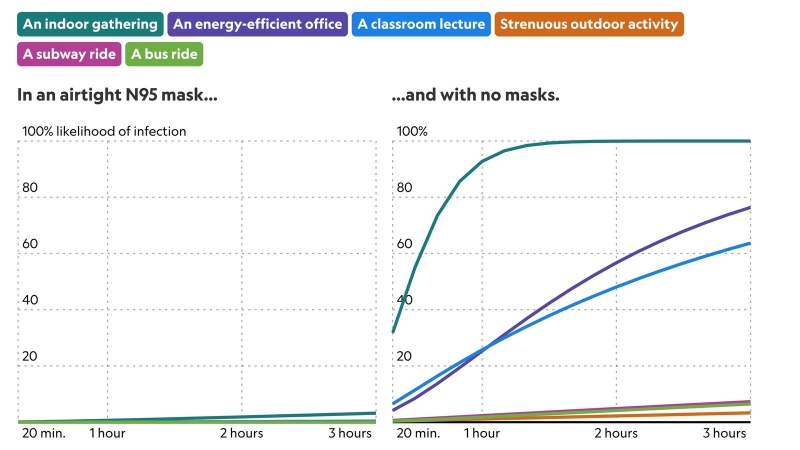 Amid the pandemic, once normal activities are now peppered with questions and concerns. Can kids go back to crowded schools? Is it safe to eat dinner with friends? Should we worry about going for a run? A recent modelling effort may help provide some clues. Led by Jose-Luis Jimenez at the University of Colorado Boulder, the charts below estimate the riskiness of different activities based on one potential route of coronavirus spread: itty-bitty particles known as aerosols. Coughing, singing, talking, or even breathing sends spittle flying in a range of sizes. The closer you are to the spewer, the greater the chance of exposure to large, virus-laden droplets that can be inhaled or land in your eyes. But many scientists have also grown concerned about the potential risks of aerosols—the smallest of these particles—which may float across rooms and cause infections. It’s a worry that's greatest where ventilation is poor and airborne particulates could build. While the World Health Organisation recently acknowledged that aerosol transmission cannot be ruled out for some situations, they emphasised more research is needed to conclusively demonstrate its role in the spread of the virus.
View the full story here: https://www.nationalgeographic.co.uk/science-and-technology/2020/08/measure-the-risk-of-airborne-covid-19-in-your-office-classroom-or
